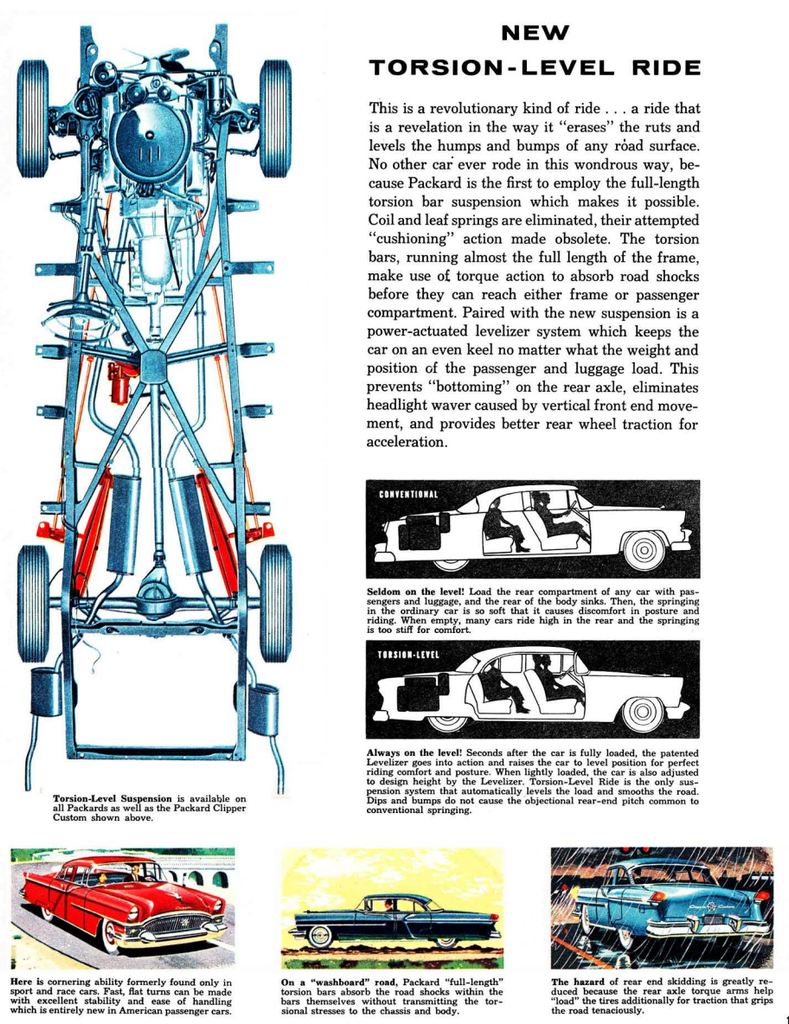
The Torsion-Level ride worked fine for years. Then it started over-extending: the rear kept climbing and the motor never got the signal to stop.
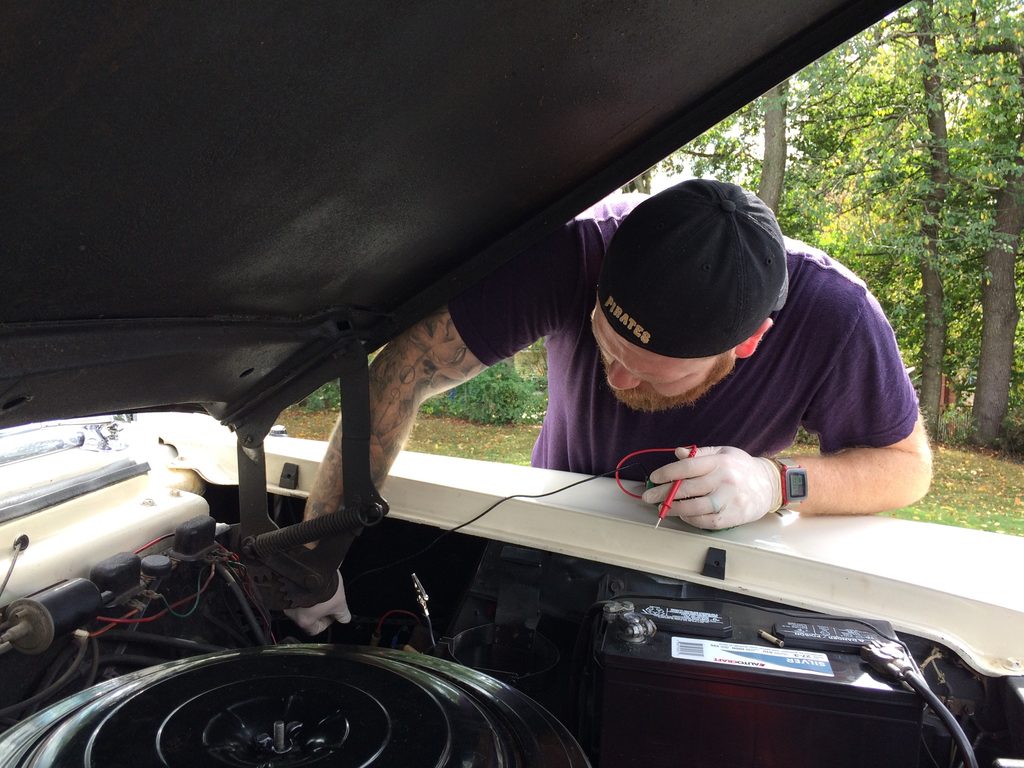
We killed power at the solenoids under the hood, then jumped them manually to bring the car back down. Figuring out which terminal meant up and which meant down took longer than it should have.
First suspect was the solenoids. We replaced them. The car kept over-leveling.
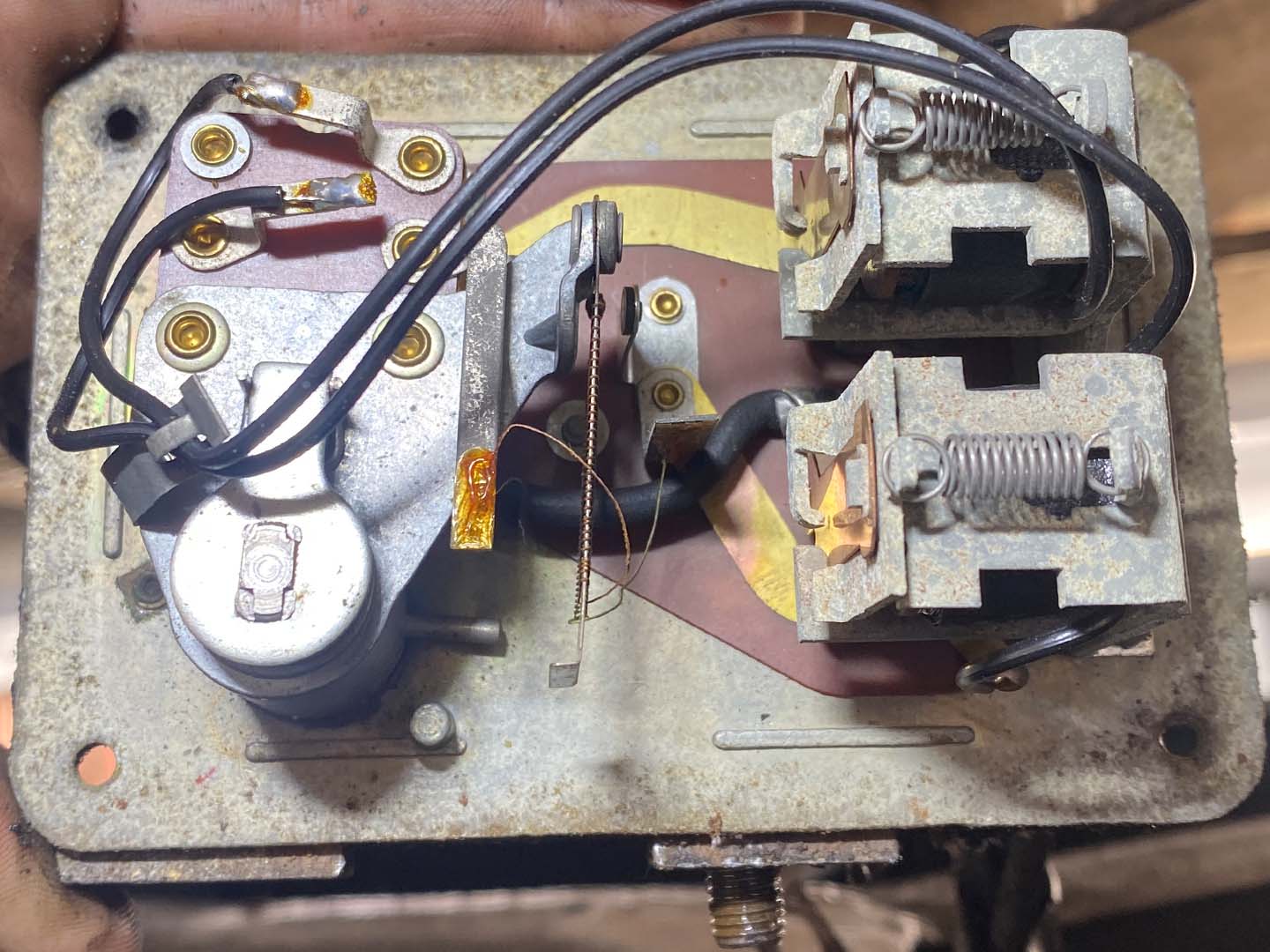
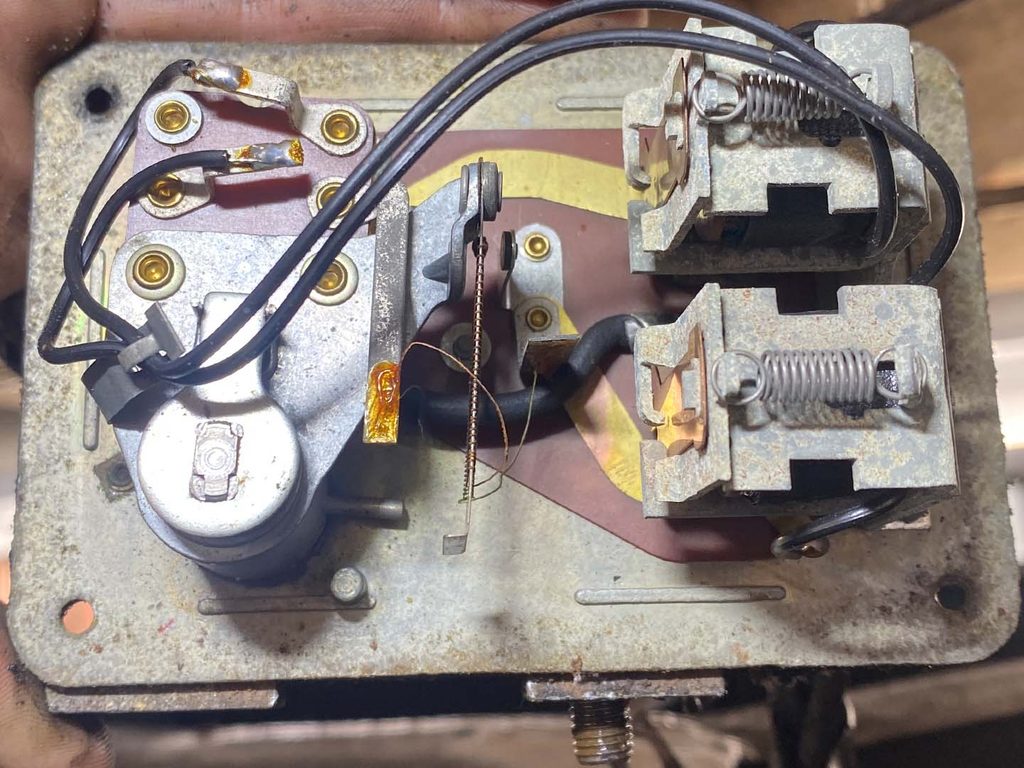
Next was the control box itself. Inside, the fine wire on the bi-metal timer had broken away from the unit entirely. The limit switch was a suspect too.
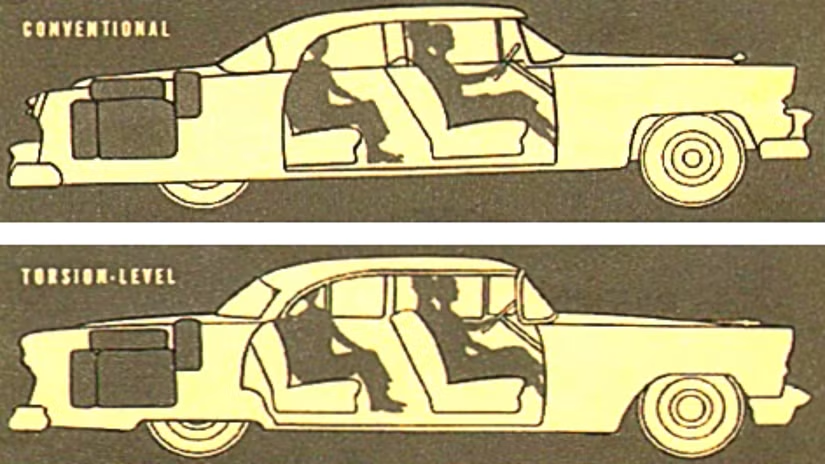
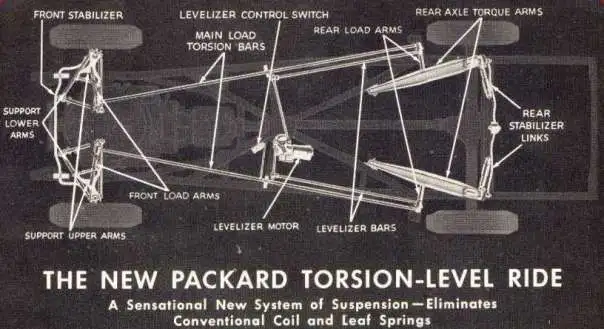
The compensator system is a second, short pair of torsion bars at the rear, separate from the main bars that run the length of the car. A motor, geared down about 2,762 to 1, winds or unwinds those bars through a control rod and turnbuckle to raise or lower the rear end whenever the load changes: passengers, a full trunk, a full tank of gas.
The control box is what decides when that correction is actually needed. A lever tied to the compensator bar senses when the car is riding off level. A bi-metal timer, the same idea as an old thermal flasher in your holiday lights or turn signal, holds that signal for five to seven seconds before acting, so a single bump does not trigger a correction, only a load that stays changed.
Once the delay clears, a relay sends power out through the box’s pink and yellow terminals to the solenoids under the hood, which run the motor. The same lever that first sensed the car was off level appears to be what tells the motor to stop, once the bar winds the car back level.
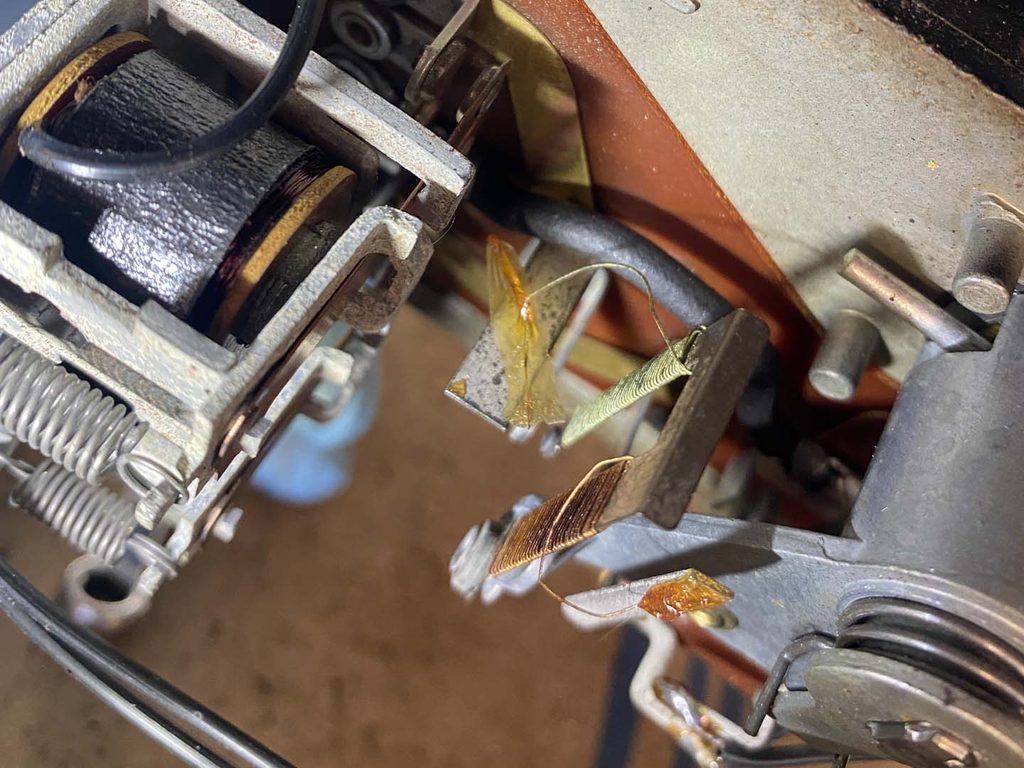
That is what makes a broken timer wire or a bad limit switch dangerous, not just annoying. Nothing about the motor itself tells it to quit, and with that much gear reduction behind it, it has the torque to keep going regardless. Left uncorrected, it spins the compensator bar all the way around, past the top of its designed arc. Past that point the linkage’s direction of force reverses and binds, and that bind is what damages the bars.
We weighed modernizing the box: solid-state relays and an IC timer, built into the original housing, a conversion other Packard owners have documented. In the end we went looking for an original instead. Found a new-old-stock control box from a seller in Utah and ordered it, more risk than we would normally take on a part we had not seen in person. It arrived exactly as advertised.
It is in hand now. Next up: pulling the failed box and putting the NOS one in its place.