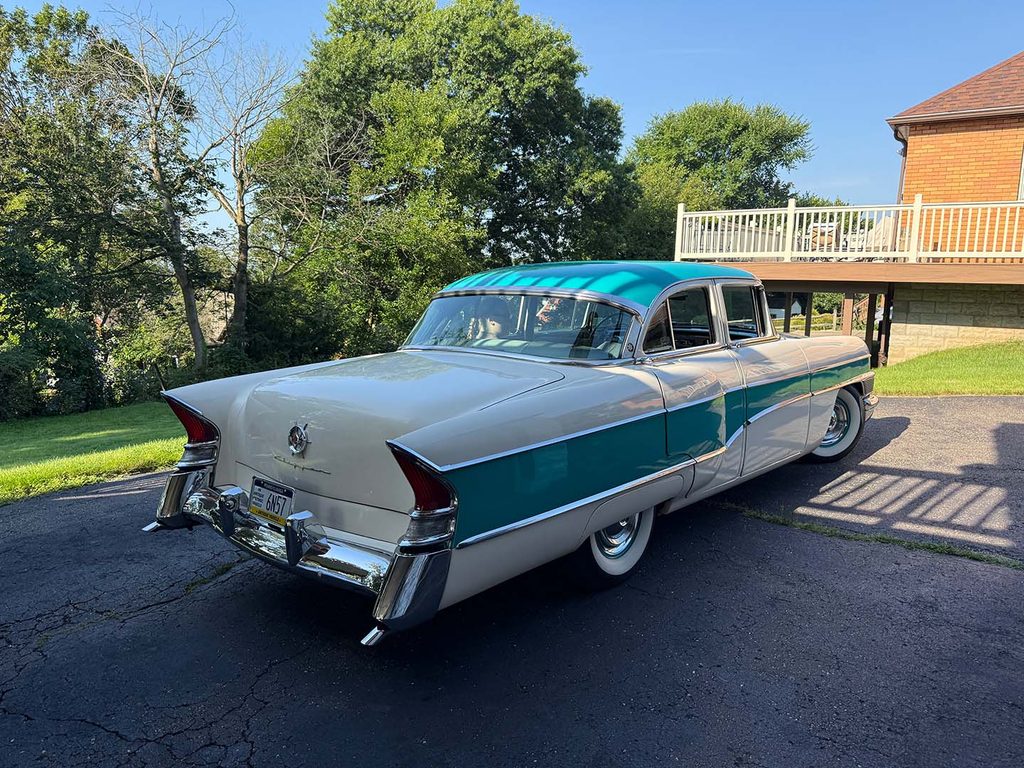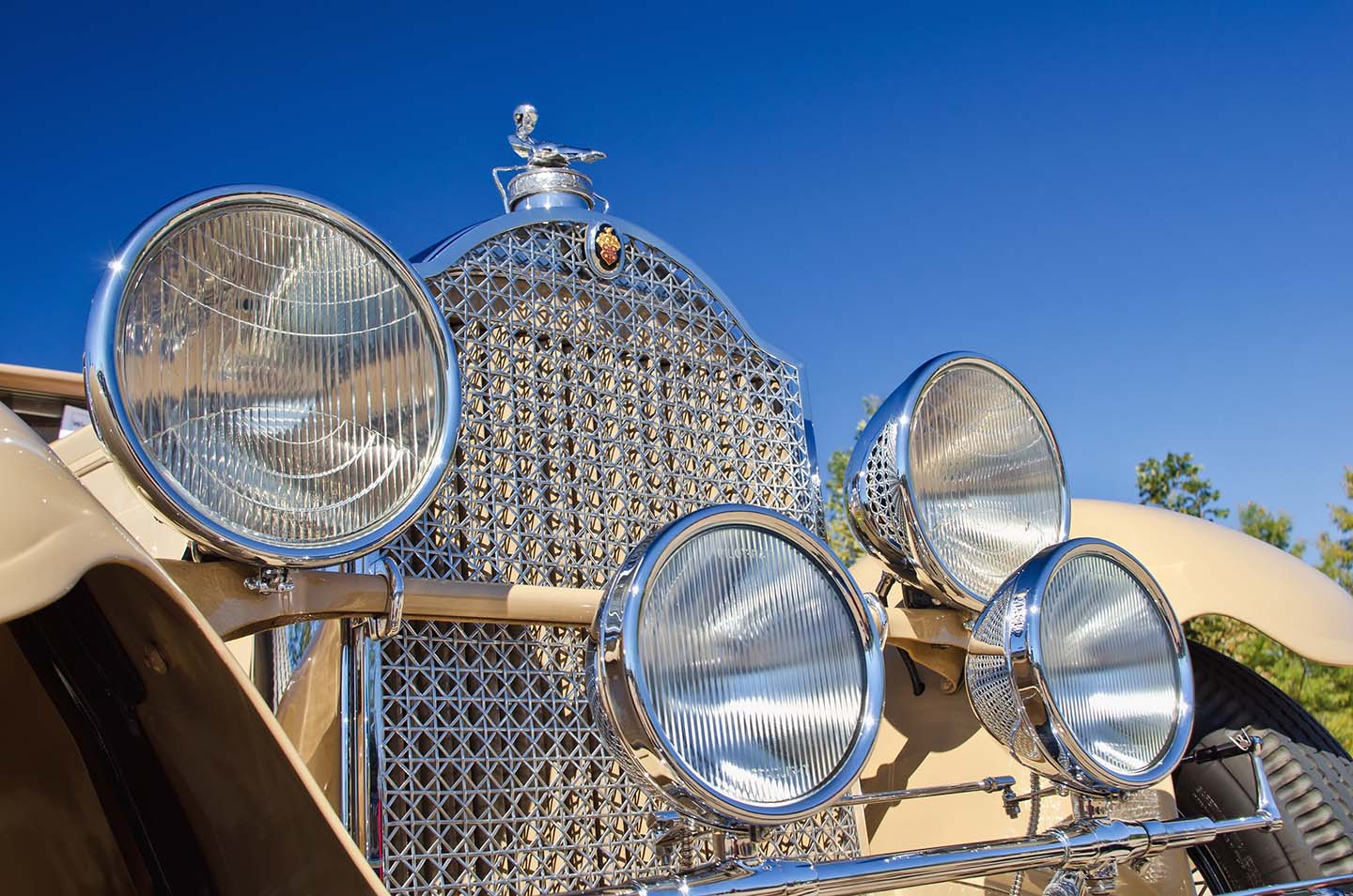
“Ask the man who owns one.” That was Packard’s own slogan, and it wasn’t idle bragging. In the 1930s, Packard’s V-12 outsold Cadillac’s V-12 and V-16 combined, and wealthy buyers who wanted a custom-bodied car went to Packard first. Twenty years later, the company that wrote that slogan was two years from disappearing entirely. This car, a 1956 Clipper Custom, was built in the middle of that collapse, carrying some of the most ambitious engineering Packard ever put into a production car.
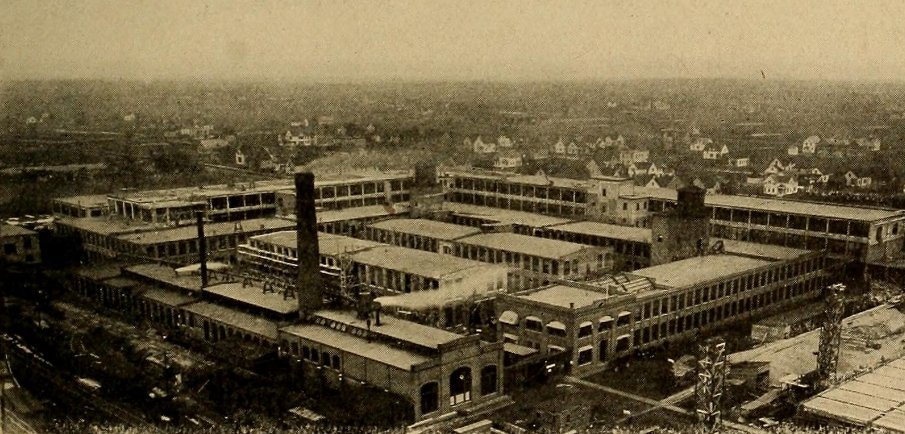
[Packard’s factory, circa 1904, public domain.]
Losing to Cadillac
Packard didn’t lose the postwar luxury market overnight. Cadillac’s tailfins, debuted in 1948, met some resistance at first, and that bought Packard a year or two of breathing room. It didn’t last. Packard’s own styling started chasing Cadillac’s cues instead of building on its own identity, and the brand’s visual signature blurred year by year. Add a thinner dealer network and, for most of the decade, no real technical edge, and Packard’s reputation eroded even as the cars themselves stayed well built.
A Merger That Was Supposed to Save the Company
In 1954, Packard merged with Studebaker, hoping for the scale neither company had alone. Only after the deal was legally locked in did Packard’s leadership discover Studebaker’s own numbers were far worse than disclosed: a break-even point of roughly 282,000 cars a year, against sales of barely 82,000 in 1954. President James Nance inherited a company that could never again just build good cars. Every decision now had to route around a debt no amount of engineering could fix on its own.
Building a Car Anyway, on What Was Left
Designer Dick Teague’s redesign for 1955 reskinned a body shell that dated back to 1948-49. There was no money for genuinely new sheet metal, only for a facelift: a wrapped windshield, eggcrate grille, “cathedral” taillights, chrome V emblems, twin radio antennas, scoops and scallops, running lights built into the rear fenders. That same design language carries straight into this car, a 1956 Clipper Custom.
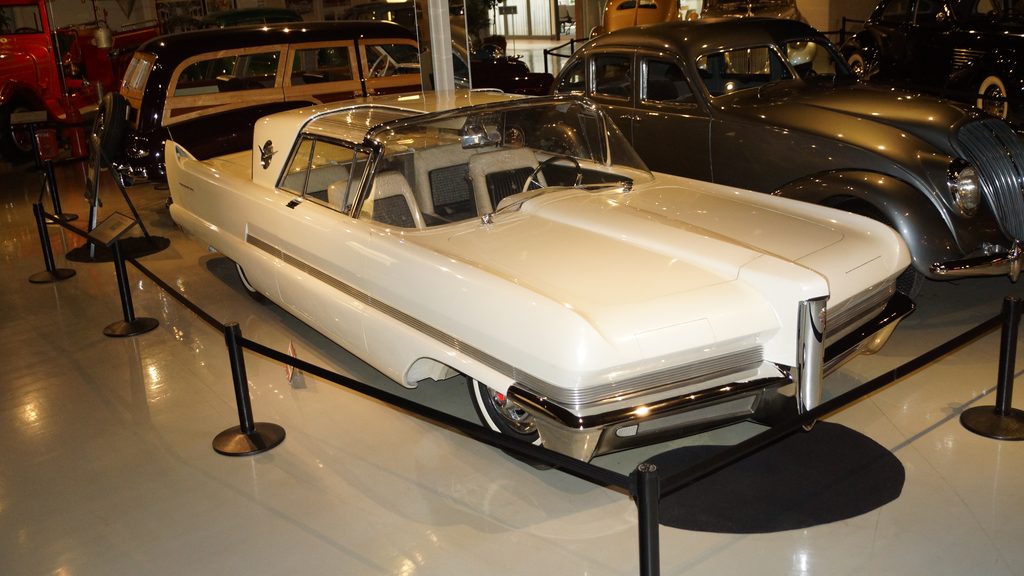
[The 1956 Packard Predictor concept, designed by Dick Teague, CC BY 2.0 (credit Greg Gjerdingen).]
The Engineering Answer: Torsion-Level and Twin Ultramatic
Instead of retreating, Packard doubled down on engineering. Torsion-Level Ride linked the front and rear suspension with long torsion bars, and a small electric servo corrected rear ride height under load, on roughly a seven-second delay. It was more durable than the air suspensions rivals were experimenting with, and standard on the Patrician and available across the line, including this car. Paired with Twin Ultramatic, already considered Detroit’s best automatic transmission, given a selectable high-performance mode. Some 1956 Packards offered pushbutton shift control; this car’s Ultramatic runs the more traditional way, a stalk on the steering column. The 1956 Caribbean, riding on the same underpinnings, was Packard’s postwar high point, genuinely able to compete with Cadillac, Lincoln, and Chrysler at every level. It arrived three years too late to matter.
A Company Split in Two, for One Year Only
1956 was also the year James Nance tried to solve Packard’s prestige problem by amputation: he split the mid-priced Clipper off as its own standalone marque, with its own dealer signage and no Packard badging at all. Dealers and customers hated it. Some dealers started defecting to Mercury. Nance reversed course, but not until after the 1956 model year had already sold. Which means this specific car, a 1956 Clipper Custom, was born into a year when it wasn’t even officially a Packard, before being folded back into the family the following year.
The Money Runs Out
By 1956, Packard was effectively out of cash, and no bank would extend further financing. In May, the aviation conglomerate Curtiss-Wright stepped in with operating capital and took control. Packard’s Detroit operations, the historic plant on East Grand Boulevard, wound down that same year. The last Packard built in Detroit rolled off the line on June 25, 1956.
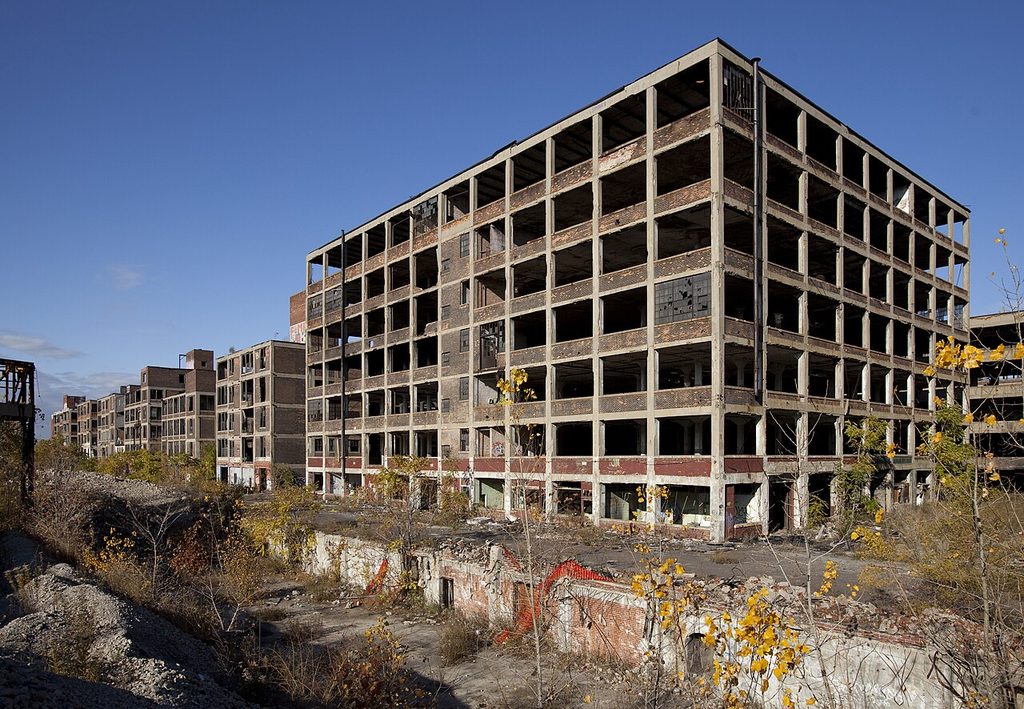
[The Packard plant as it stood in 2009, By Albert duce, CC BY-SA 3.0]
Why 1956 Is the Last Real Packard
Production for 1957 and 1958 moved to Studebaker’s plant in South Bend, Indiana, built on Studebaker platforms because there was no money left to tool anything new. Enthusiasts call them “Packardbakers,” and the sales numbers show buyers agreed: 28,835 Packards sold in 1956, just 4,809 the following year. The Packard name disappeared for good after the last car left South Bend on July 25, 1958.
One of the Last, Built Like It Still Mattered
Packard didn’t coast into the end. Its last real year in Detroit was arguably its most technically ambitious: a genuinely innovative suspension, a genuinely good transmission, and styling stretched about as far as an old body shell and a starved budget could take it, built by a company that knew exactly how much trouble it was in and built a beautiful car anyway. This one, VIN 5662-3040, engine number matching, has been on the road for seventy years now.